Apple navigates AI and satellite partnerships amid CEO succession talks
Apple explores AI and satellite partnerships amid CEO succession discussions, signaling strategic shifts.

As Apple Inc. celebrates its 50th anniversary, the company finds itself at a crossroads, balancing CEO succession planning with strategic partnerships in AI and satellite technology. According to Simply Wall St's report in Yahoo Finance, these moves are not just about maintaining its competitive edge but are also a testament to Apple's ability to adapt to a rapidly evolving tech landscape.
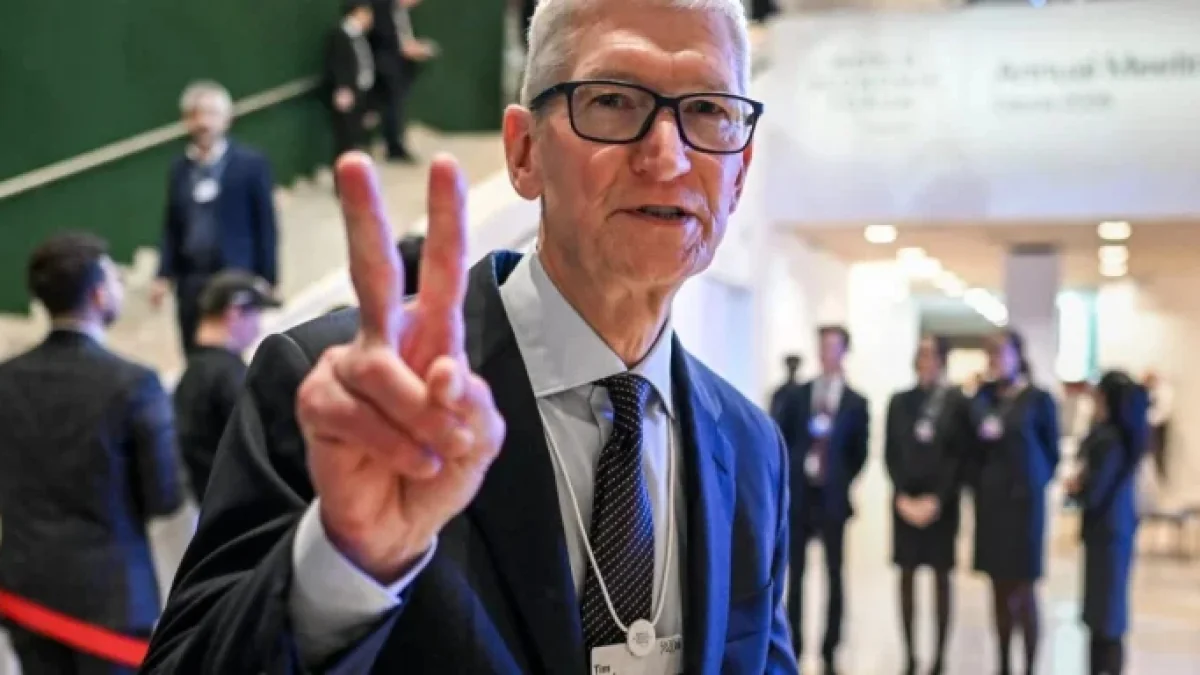
CEO Tim Cook has been at the helm since 2011, steering Apple through one of its most transformative periods. Under his leadership, Apple expanded its product and service lines, significantly boosting its market share and profitability. However, with Cook's tenure approaching its 13th year, discussions around potential successors are intensifying. Speculation points to internal candidates like Deirdre O'Brien and John Giannandrea, each bringing distinct strengths that could influence Apple's strategic direction.
In tandem with these leadership considerations, Apple is reportedly planning to open Siri to third-party AI assistants on iOS platforms. This marks a notable shift from its traditionally closed ecosystem, suggesting a strategic realignment towards fostering a more collaborative digital assistant environment. By becoming an AI distributor, Apple could leverage its ecosystem—spanning over 2.5 billion devices—to enhance user experience and operational efficiencies, potentially redefining its role in the AI domain.
The significance of this move cannot be overstated. In an industry where giants like Google and Microsoft have made considerable advances in AI technology, Apple's decision to embrace partnerships reflects a strategic pivot necessary to sustain its leadership. Furthermore, this realignment aligns with broader industry trends where collaboration and open ecosystems are seen as vital to driving innovation and staying competitive.
Simultaneously, Amazon's reported interest in acquiring Globalstar—Apple's satellite partner—adds another layer of complexity. Apple holds a 20% stake in Globalstar and has committed approximately $1.5 billion. This potential acquisition raises critical questions about the control and management of satellite infrastructure integral to Apple's product offerings, particularly its connectivity features. Should Amazon proceed with the acquisition, it could reshape Apple's strategic calculus regarding connectivity, potentially affecting service quality and pricing power.
This dual focus on AI and satellite technology underscores Apple's proactive approach to navigating a rapidly changing technological landscape. By forging strategic partnerships, Apple aims to balance control with collaboration, a strategy that could redefine its competitive positioning in the tech ecosystem. For investors, these developments highlight the interconnectedness of leadership succession, AI strategy, and supplier relationships in shaping Apple's future trajectory.
Historically, Apple has adeptly managed leadership transitions and strategic shifts. The transition from Steve Jobs to Tim Cook in 2011 serves as a prime example. Despite initial uncertainty, Apple thrived under Cook's leadership, emphasizing operational efficiency and service expansion. This historical precedent suggests that while current discussions around succession and strategic partnerships may introduce uncertainty, Apple is well-equipped to adapt and thrive.
Looking ahead, Apple's exploration of AI partnerships and satellite technology, coupled with ongoing leadership succession discussions, signals a proactive approach to sustaining its competitive edge. These strategic maneuvers not only position Apple for continued growth but also set the stage for significant developments in both product offerings and corporate governance.
For the tech industry at large, Apple's moves could have far-reaching implications. As companies increasingly rely on partnerships to drive innovation, Apple's strategy may serve as a blueprint for others navigating similar transitions. The shift towards open ecosystems and collaborative partnerships could reshape industry standards, influencing how companies approach AI and connectivity.
In summary, Apple's strategic exploration of partnerships in AI and satellite technology, against the backdrop of CEO succession planning, exemplifies its commitment to maintaining leadership in an evolving tech landscape. By balancing internal leadership transitions with external collaborations, Apple sets the stage for transformative developments that will likely shape its future trajectory and impact the broader tech sector.
Stay informed on leadership transitions
Get the latest insights on interim management, fractional leadership, and business transformation delivered to you.
Subscribe now