APAC sees 73% internal CEO appointments as leadership transition strategy shifts
APAC sees 73% of new CEO roles filled internally in 2025, highlighting strategic shifts.
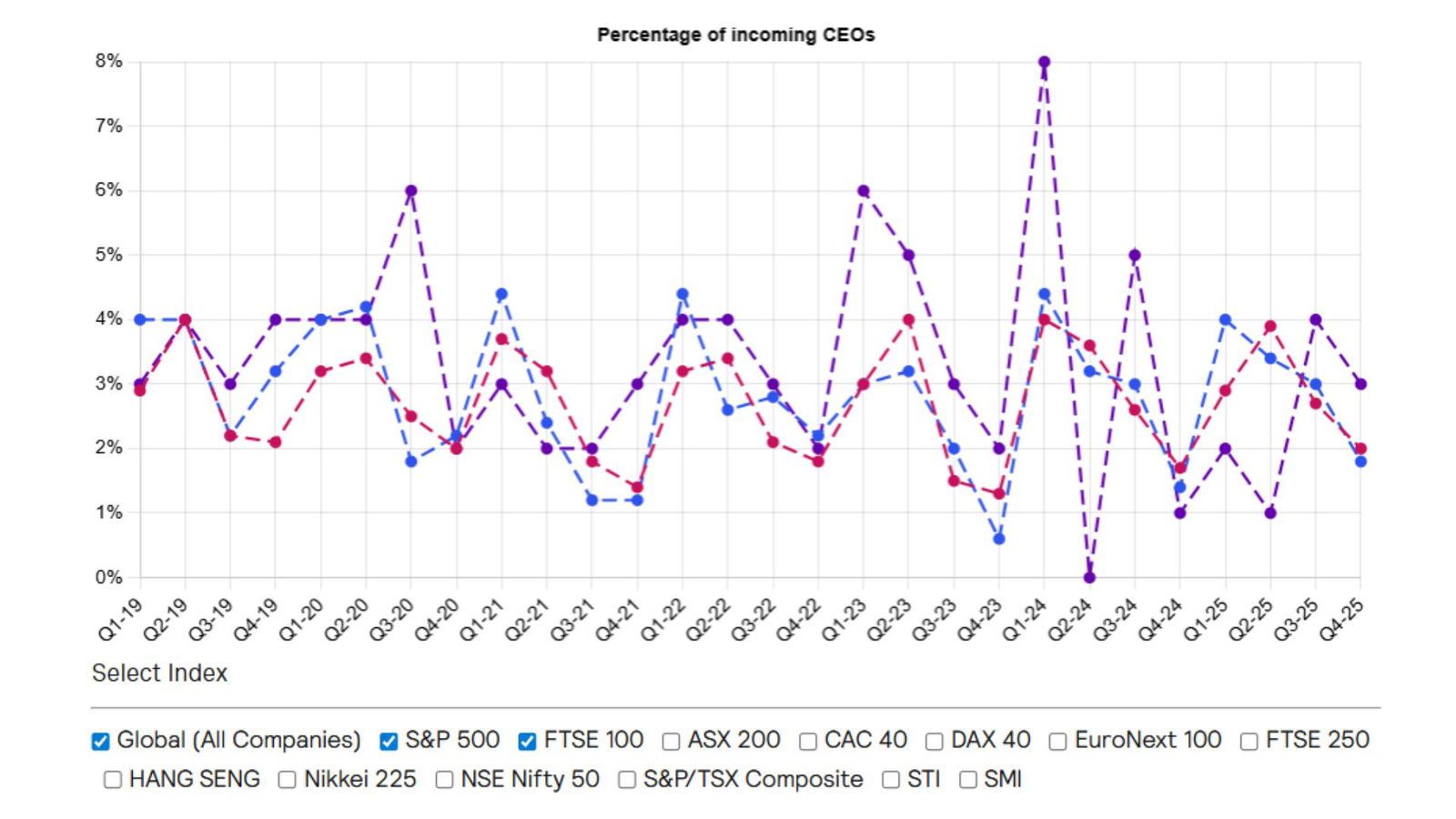
In a significant development for corporate governance in the Asia-Pacific (APAC) region, 73% of new CEO appointments in 2025 came from within the companies themselves. This strategic choice, highlighted in the 2025 CEO Turnover Index by Russell Reynolds Associates, indicates a shift towards leveraging internal talent as opposed to seeking external candidates. The trend is more pronounced in APAC compared to the global average of 68%, suggesting a regional preference for continuity and deep organizational knowledge.
The APAC region experienced a notable increase in CEO turnover, with 87 departures in 2025, marking a 26% rise from the previous year. This surge was most evident in Australia, which recorded 34 departures, followed by Japan with 31. Such turnover is part of a worldwide pattern, with 234 CEO exits globally, setting a record high. Euan Kenworthy, Country Lead for Singapore at Russell Reynolds Associates, attributes this to heightened media scrutiny, demanding investors, and the rapid pace of technological change, all of which are reshaping the CEO role.
Strategic Continuity Through Internal Appointments
The preference for internal promotions aligns with a broader strategy of maintaining strategic continuity and leveraging existing corporate knowledge. Boards are increasingly recognizing the value of promoting individuals who are already integrated into the company culture and who understand its strategic goals. This approach not only minimizes the risks associated with external hires but also ensures a seamless transition in leadership, which can be crucial during periods of transformation or market volatility.
In the technology sector, for instance, where rapid innovation and adaptation are critical, 40% of CEO departures were succession-driven, a significant rise from previous years. This underscores the importance of having leaders who can quickly adapt to technological advancements and maintain the company's competitive edge.
First-time Leadership and Fresh Perspectives
Another striking trend is the rise of first-time CEOs, who accounted for 94% of new appointments in APAC, closely mirroring global trends. This shift towards fresh perspectives is indicative of boards' desire to inject new ideas and approaches as companies navigate complex and fast-changing markets. The emphasis on building a robust leadership bench rather than relying on a single 'ready-now' candidate is reshaping succession planning practices, ensuring that a variety of leadership styles and strategies are available to meet future challenges.
Historically, companies that have successfully managed internal transitions, such as Microsoft with Satya Nadella and Unilever with Alan Jope, have seen continued success and strategic clarity. These examples highlight the potential benefits of internal appointments, including a seamless continuation of strategic initiatives and enhanced employee morale.
Challenges in Gender Diversity
Despite these positive developments, challenges remain, particularly in gender diversity. The representation of women in CEO roles continues to decline, with only 9% of new appointments going to women globally in 2025. This ongoing imbalance underscores the need for boards to prioritize diversity and inclusivity in their leadership strategies to reflect broader societal values and enhance organizational performance.
Emphasis on Planned Successions
The rise in planned successions, accounting for 32% of global CEO departures in 2025, marks a shift towards more disciplined succession planning. This approach ensures that leadership changes are not only well-timed but also aligned with the company's long-term strategic objectives. Planned successions were particularly prevalent in industries such as technology and financial services, where strategic foresight is essential.
Historically, planned successions have been associated with smoother transitions and sustained organizational performance. Companies that have adopted this approach have often been better positioned to navigate market disruptions and capitalize on new opportunities.
Overall, the trends highlighted in the Russell Reynolds survey reflect an evolving understanding of effective corporate governance. As boards face increased expectations and market volatility, robust succession planning and a focus on internal leadership development are becoming critical components of successful governance strategies. These practices not only support continuity and adaptability but also position organizations for long-term success in a rapidly changing business landscape.
Stay informed on leadership transitions
Get the latest insights on interim management, fractional leadership, and business transformation delivered to you.
Subscribe now